// AKKA.STREAMS
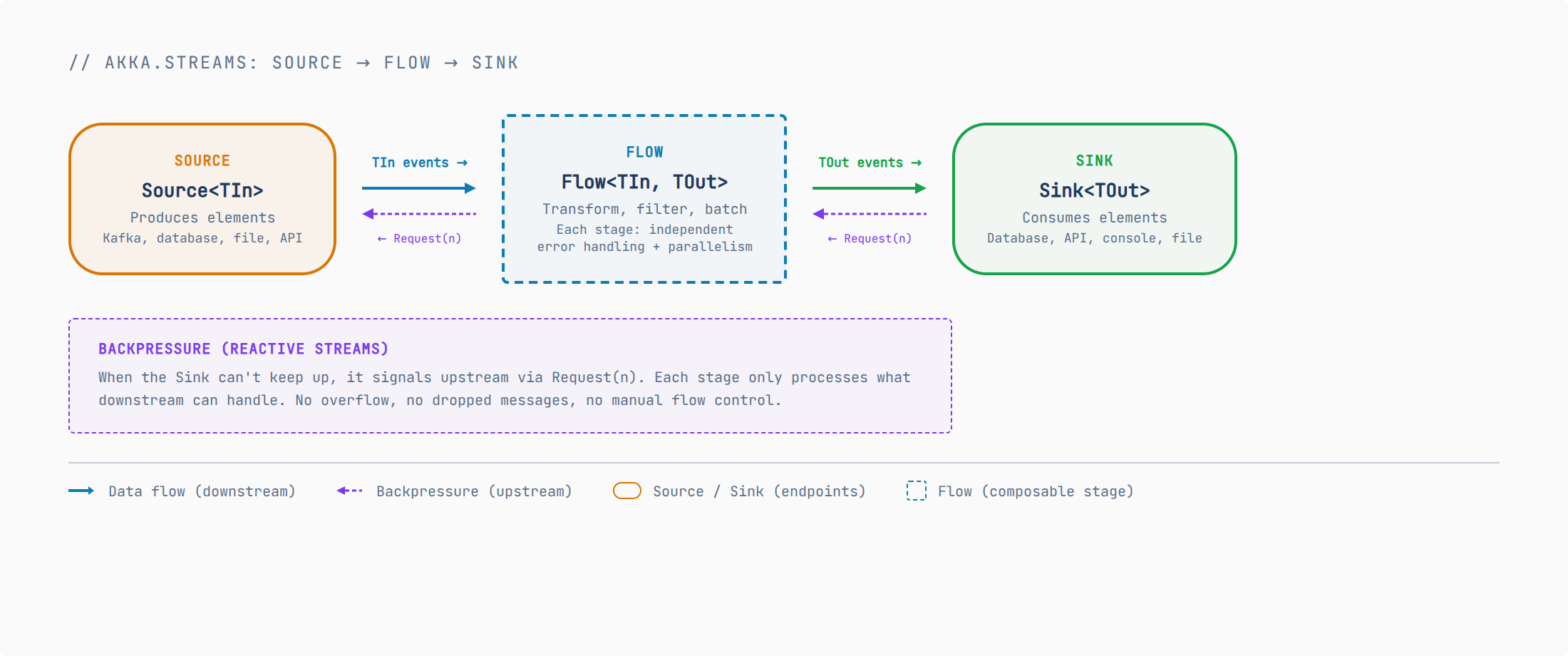
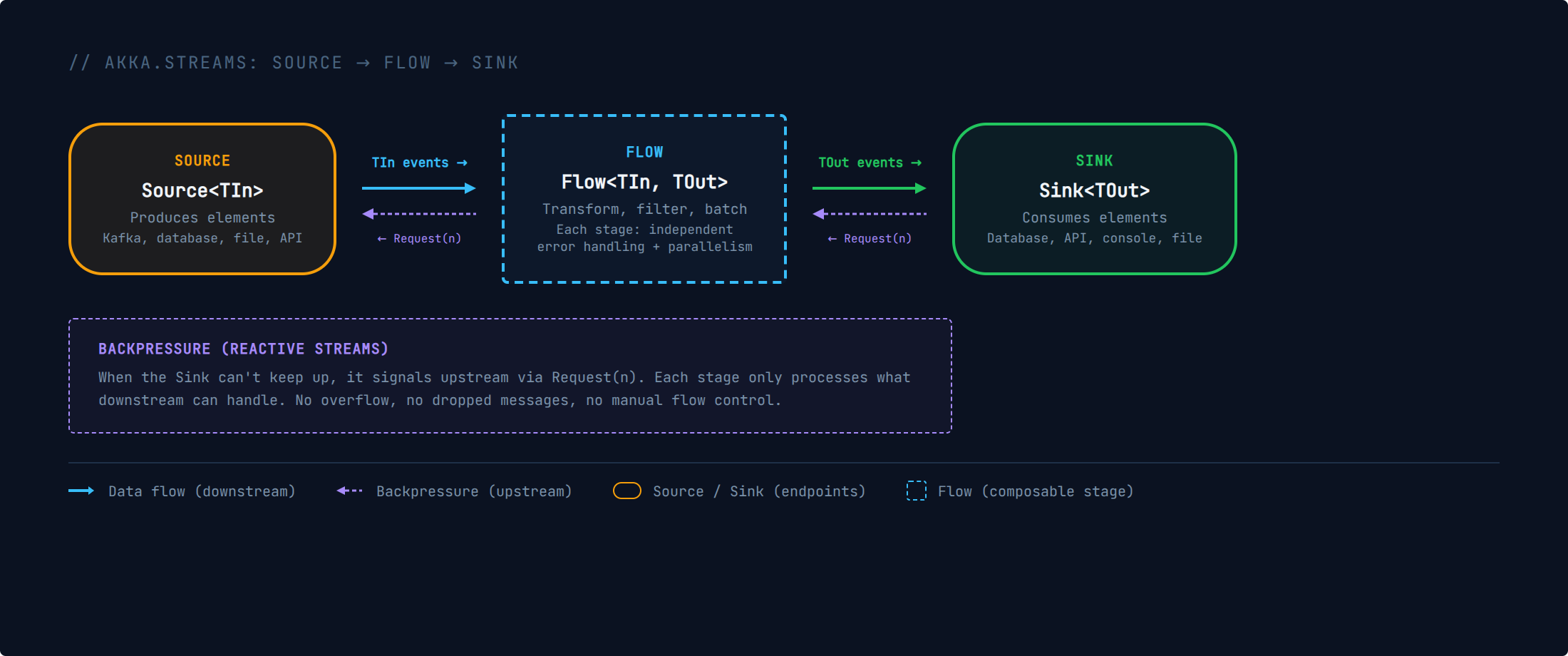
Akka.Streams is a high-level abstraction over Akka.NET for building composable, strongly typed, backpressure-aware data pipelines. The syntax looks like LINQ, streams materialize into IAsyncEnumerable, and they integrate with Kafka, RabbitMQ, SQS, and more.
// IN_CODE
Build a stream, compose stages, throttle to 100/sec, and materialize it as an IAsyncEnumerable that any .NET developer can consume.
// Build a composable stream pipeline var results = Source .From(orders) .Via(Flow.Create<Order>() .Select(o => Validate(o)) .Where(o => o.IsValid) .Throttle(100, TimeSpan.FromSeconds(1))) // rate limit: 100/sec .RunAsAsyncEnumerable(materializer); // Consume as IAsyncEnumerable — familiar to any .NET dev await foreach (var order in results) { await ProcessOrder(order); }
// KEY_CAPABILITIES
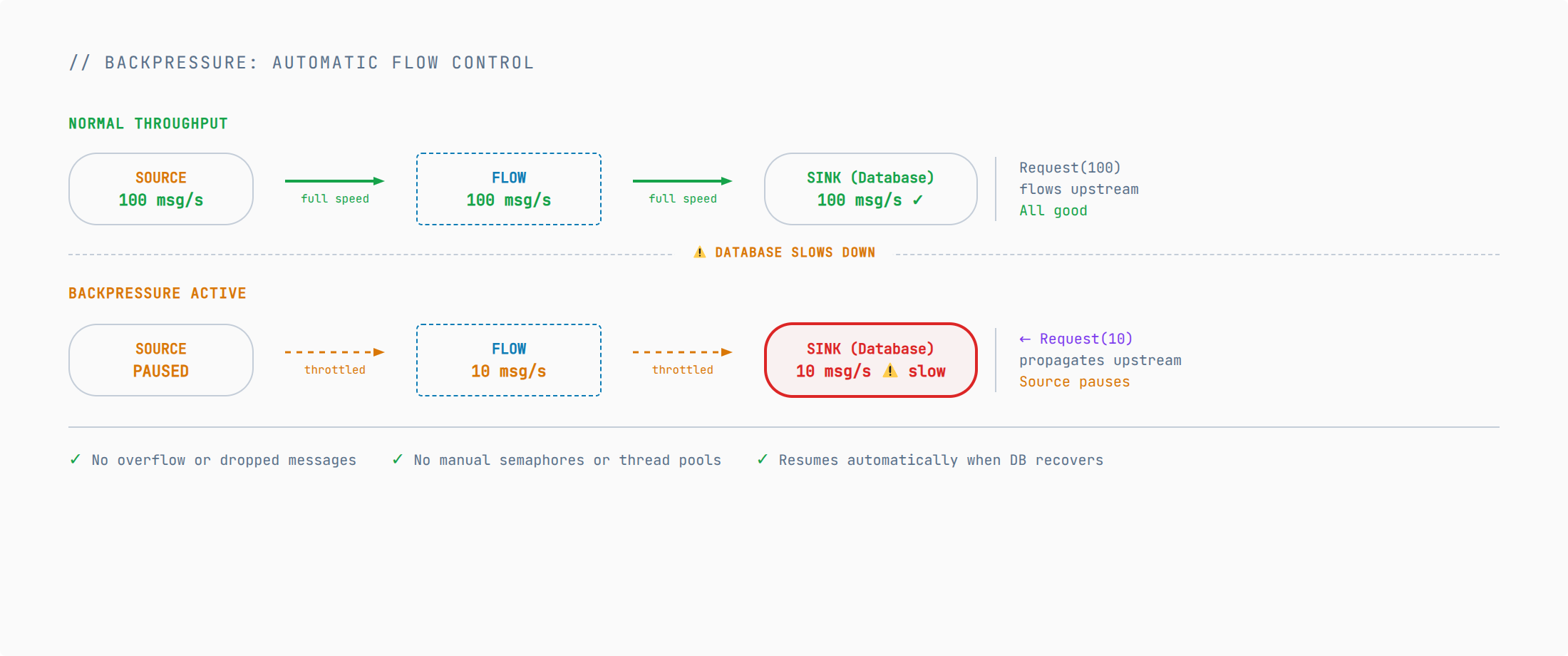
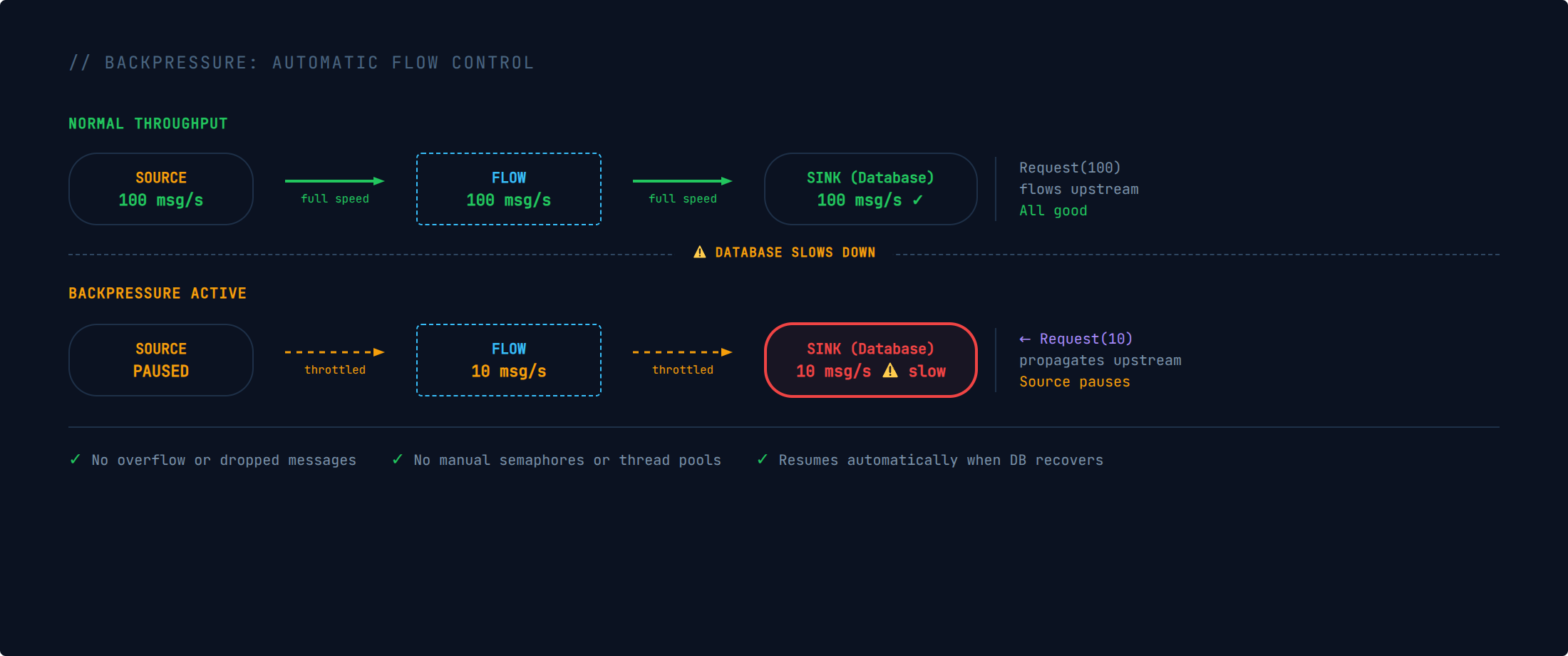
Reactive Streams implementation automatically pauses upstream producers when downstream consumers can't keep up. No manual semaphores or flow control needed.
Build complex processing graphs by composing sources, flows, and sinks. Each stage has independent error handling and parallelism settings.
Single-threaded, non-blocking execution. Production users report managing massive parquet files with under 60MB RAM per process.
Expose complex Streams workflows as IAsyncEnumerable that other .NET developers can easily recognize and consume.
// KAFKA_INTEGRATION
Akka.Streams.Kafka sits on top of Confluent.Kafka and eliminates the distributed systems boilerplate: built-in backpressure, supervision strategies for error handling, transparent partition rebalancing, and compositional design. Read the full comparison or explore the demo repo.
// CONNECTORS
// WHO_USES_THIS
Ecco / Sneaks and Data
Retail / Data Science — Denmark
Ecco's data science subsidiary uses Akka.Streams as the backbone of their Spark cluster workload management, ML execution (10,000+ parallel compute requests via MergeHub), and real-time data streaming across 20+ countries. They built a simpler streaming alternative to Kafka and Kinesis with Akka.Streams, reducing operational complexity and hiring requirements.